A familiar game is being used in an unfamiliar way in northern Mexico. A new lotería deck swaps classic icons for native Sonoran Desert plants, with each card pairing local names and scientific names. It was built from field observation, community knowledge, and a digital biodiversity tool, then designed to be played in groups. The project’s creator says the goal is reconnection: learn what grows locally, then treat it as worth keeping.
Project snapshot
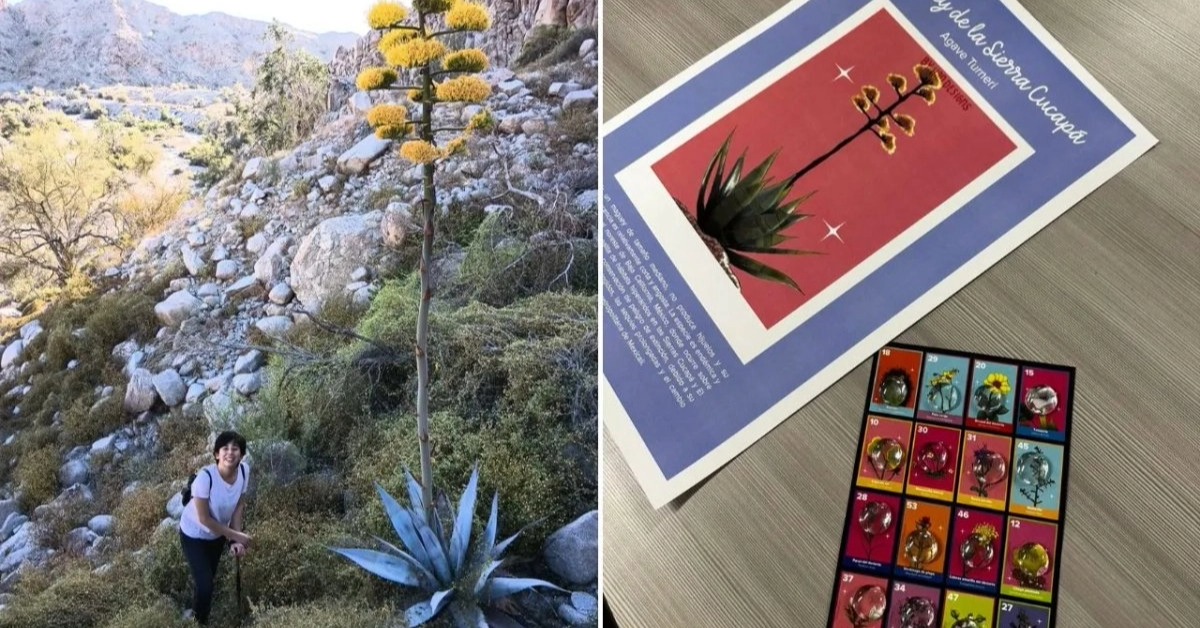
The project adapts lotería, a widely known Mexican game of chance, into a conservation and public-education tool focused on native plants from the Sonoran Desert region. The deck documents 54 native plant species, matching the traditional 54-card format associated with standard lotería sets.
According to interviews and event materials, each card includes both a common name and a scientific name. The deck is also designed for group play (up to 10 players) and is presented as a way to learn plant recognition through play.
Several species named in the report illustrate the range of plants included. Examples cited include Agave turneri (linked to the Sierra Cucapá area), Psathyrotes ramosissima (known in English as velvet turtleback), Trichoptilium incisum, and Pluchea sericea (cachanilla). Separate coverage also describes cards depicting plants such as mezquite, palo fierro, ocotillo, and agaves, emphasizing that the set is not limited to iconic cacti.
Method and partners
The creator, Mariana Guevara Villarreal, describes the deck as grounded in both observation and documentation. Reporting credits her with combining direct plant observations in and around Mexicali with iNaturalist, plus bibliographic review and field guides. She also describes ethnographic work in local communities to recover regionally used common names, noting that border proximity can lead to English-derived names that may replace or obscure older local usage.
The illustration work is attributed to Hanna Lizette García Bermúdez, described as a graphic designer (or design student) who collaborated closely with the project lead to keep plant colors and morphology consistent with real specimens.
Institutional participation is also documented. The deck’s development and early presentations are linked to Universidad Autónoma de Baja California, including the Faculty of Humanities in Mexicali. A faculty bulletin describes an event in late September 2025 in which “Ecocima” presented an activity on plant identity, featuring participation by the project creator and the illustrator, and focusing on 54 species.
Across sources, the timeline is broadly consistent on three points: the idea emerged about three years before the 2025–2026 coverage, the intensive production phase took around ten months, and the deck has been presented in university settings as a hands-on educational activity.
Conservation context in the Sonoran Desert region
The deck’s educational frame rests on a simple premise: effective conservation often begins with recognition—knowing what exists locally, and what is being lost. That framing matters in the Sonoran Desert, an ecoregion spanning parts of the southwestern United States and northwestern Mexico.
Biodiversity estimates for Sonoran Desert plants vary by definition and boundary choices. A U.S. National Park Service overview notes more than 2,000 plant species identified in the Sonoran Desert. By contrast, the Arizona-Sonora Desert Museum’s “Natural History of the Sonoran Desert” materials describe as many as ~3,500 native plant species in the Sonoran Desert “proper,” and about 5,000 across the broader surrounding region (Sonora, Arizona, Baja California, and adjacent southern California). Other sources, including a regional botanical-garden overview and a recent preprint on conservation gaps, reference more than 4,000 native plant taxa in the Sonoran Desert context, reflecting broader regional accounting and taxonomic choices.
Environmental pressures are well-documented across the same region. Climate-change summaries for Sonoran Desert systems highlight concerns around heat, long-term drought, and groundwater decline, with consequences for surface water and ecosystems that depend on it. Invasive plants add a separate, compounding stressor: for example, buffelgrass is widely cited by U.S. agencies as increasing wildfire risk by creating continuous fuels in landscapes that historically did not burn frequently. Materials specific to Saguaro National Park describe how high-intensity fires fueled by invasive grasses can harm slow-growing native plants, including iconic cacti.
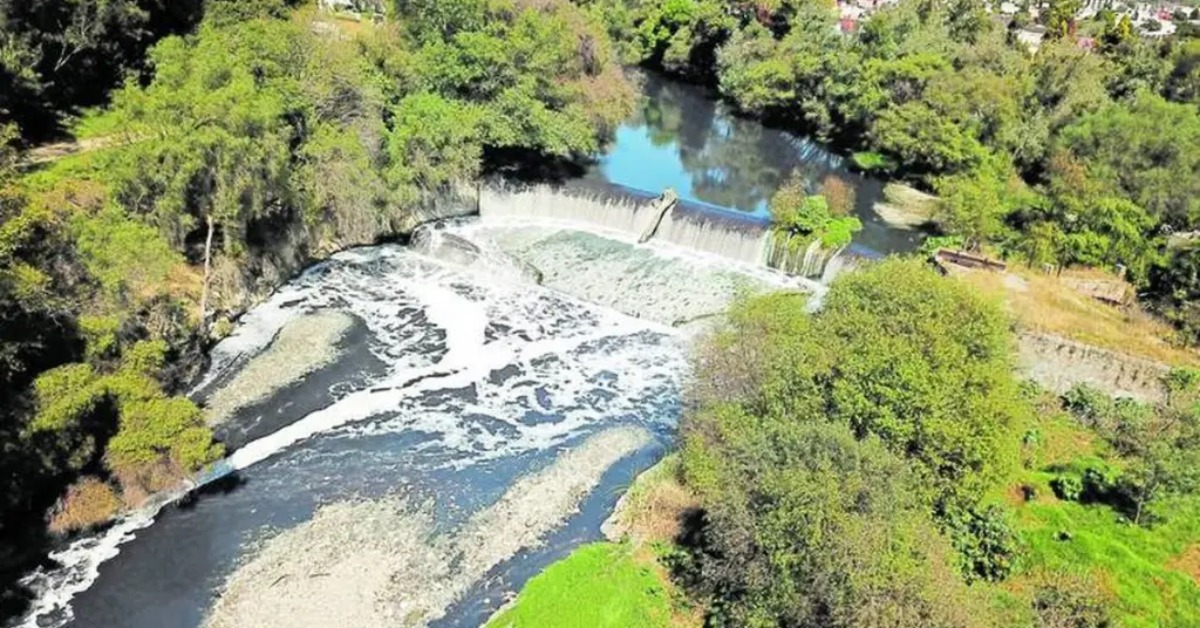
The project’s origin story is also linked, in reporting, to larger binational restoration efforts on the Colorado River Delta. The creator traces her interest in conservation-oriented science communication to a binational agreement that enabled major environmental flows to the delta. A widely documented example is the 2014 “pulse flow,” enabled under a U.S.-Mexico agreement framework, which released on the order of 132 million cubic meters of water—equivalent to 132 billion liters—over about eight weeks to support riparian restoration in the delta corridor.
Evidence base on learning through play
The project’s strategy—teaching plant recognition through a familiar game—aligns with a broader body of research on game-based learning and serious games. A large systematic review and meta-analysis of game-based learning in early childhood education reported overall positive effects across several domains, including cognitive and motivation/engagement outcomes, with effect sizes in the moderate range (noting variation by context and design).
Environmental and sustainability education research points in a similar direction, while also emphasizing limits. A widely cited review on serious games for environmental education reports that games are often used to raise awareness and can support learning and pro-environmental attitudes and behaviors, but that study quality and evaluation approaches vary, resulting in uneven results across settings. A public-engagement case study from the University of Oxford summarizes experimental findings where experiential games increased engagement and social bonding relative to traditional teaching, while learning outcomes were sometimes similar across formats.
In this context, the design specifics described for the plant lotería deck—visual precision, bilingual or region-specific naming work, and a shared play setting—map onto the mechanisms that studies most often associate with learning gains: attention, repetition, feedback, and social interaction. The approach is not a substitute for habitat protection or regulation, but it is consistent with a documented educational pathway: improving recognition and interest as precursors to broader conservation behavior.