The line between fintech and banking in Mexico has blurred. Digital-first firms are pursuing full bank charters, while established bank groups are launching or restructuring standalone digital brands.
What stands out in the latest cycle is the pace and variety of routes into “banca múltiple.” Some entrants have followed the long, de novo licensing path. Others have accelerated by acquiring an existing charter or by carving out a bank-owned unit into a distinct, app-led institution.
This matters because Mexico’s legal buckets do not match the labels used in marketing. “Neobank” is a useful shorthand, but it can mask differences in supervision, permitted activities, and the protection of customer funds.
What the neobank label captures and what it hides
Internationally, “neo-banks” are commonly described as retail banking providers that rely on a smartphone app and internet platform as their primary customer interface. The model leans on scalable infrastructure (including cloud and API-based systems) and tends to minimize or avoid branches.
That definition maps onto Mexico’s consumer experience—accounts opened in minutes, cards shipped to homes, service delivered in chat—but it does not map cleanly onto Mexico’s licensing structure. A firm can appear like a “bank” in the app store while operating under a non-bank license, partnering with a bank, or operating within a traditional bank group with separate branding.
Mexico’s most important dividing line is not “digital vs. traditional.” It is whether the entity is a regulated bank (“institución de banca múltiple”) or another regulated financial entity—such as an SOFIPO (popular finance institution) or an IFPE (electronic payment funds institution) — created under the fintech framework. The product set, compliance obligations, and deposit protection differ across these categories.
How fintech regulation and bank licensing intersect in Mexico
Mexico’s fintech framework is anchored in the Law for Regulating Financial Technology Institutions, published in March 2018 and shown in an updated, in-force compilation with reforms through November 2025. The law sets out to regulate fintech services and includes principles such as inclusion, consumer protection, and financial stability.
A key bridge between fintech and banking is “open finance.” Article 76 establishes that financial entities (not only fintechs) must set up standardized application programming interfaces to enable connectivity and data sharing. It also distinguishes between open financial data, aggregated data, and transactional data, and it ties sharing to supervisory rules, security standards, and customer consent requirements.
Bank licensing sits beside—not inside—the fintech license categories. In practice, a bank charter is treated as a higher-permission regime: it can allow broader deposit-taking and a wider set of banking products, but it also typically comes with heavier obligations and scrutiny. A public investor disclosure around a bank sale illustrates the institutional perimeter: approvals are framed as involving Mexico’s finance ministry and banking supervisor, with input from the central bank and the competition authority.
That structure helps explain why non-bank firms that already have scale often view a charter as the next step. It also helps explain a second strategy: acquiring a charter instead of applying for one from scratch.
Recent authorizations and applications shaping the market
A central, fresh data point is Banco Plata. The legal authorization to organize and operate as a multiple-bank was published in the federal official journal in late 2024. By mid-February 2026, coverage in the financial press described the final supervisory step: authorization to begin operations as a bank, following regulator audits and a multi-year process. In those reports, the company described an app-led, branchless model and associated scale, and its CEO, Neri Tollardo, was quoted framing the approval as a transition point from a single-product phase toward a broader banking offering.
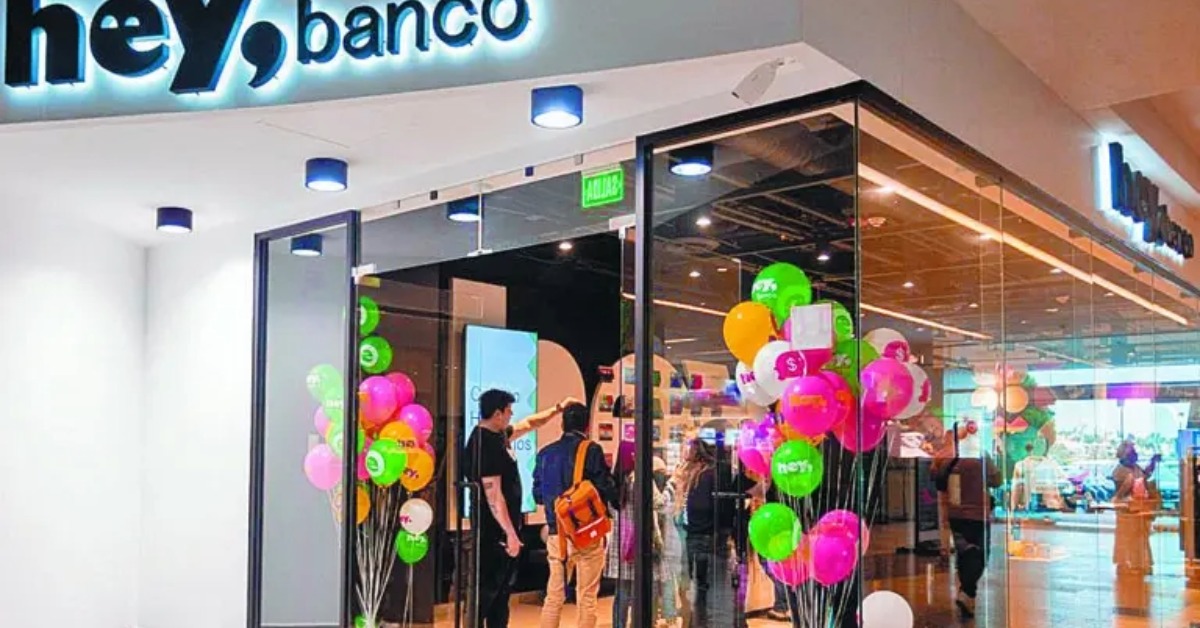
Mexico’s official-journal trail also shows how long some “digital banks” sit between authorization and full operational independence. Hey Banco received authorization for organization and operation as a multiple-bank in mid-2023. It then completed a separation process from Banregio Grupo Financiero, with reporting indicating that it would begin operating as an independent bank on its own license at the start of February 2026 (while remaining within the broader group structure).
A third pathway is the foreign, de novo charter. Revolut received authorization for organization and operations in Mexico in April 2024 via an official-journal publication. Press coverage later described the “final” authorization to start operating as a bank in October 2025. By early February 2026, an interview with its Mexico country executive described the initial product set as multi-currency accounts and transfers, and stated a target of 2 million users in the first year, along with planned investment.
Traditional bank groups have also used standalone brands to compete in the same app-first arena. Openbank began operating in Mexico in February 2025, according to announcements from Banco Santander and coverage in the Mexican financial press. These releases emphasized rapid onboarding and a product set positioned as day-to-day retail banking, while leveraging the parent group’s infrastructure footprint.
Several large fintech brands remain in the “in progress” column. The official journal shows that a “banca múltiple” authorization was published for Nu’s bank project in May 2025. Reporting around the same period described the supervisory sequence as not fully complete at the time, noting an additional operational authorization step after the initial approval.
On the payments side, Mercado Pago—part of MercadoLibre—publicly described its bank ambition in mid-2024, positioning a future charter as a way to formalize what many users already treat as “their digital bank.” By September 2024, it had formally applied for a banking license with the banking supervisor, according to both company statements and international reporting. Pedro Rivas was quoted in reporting and company materials linking the license to expanded product scope and broader deposit-taking.
Domestic digital SOFIPOs are also signaling bank intent. Finsus has been covered as advancing toward a multiple-bank transition, with growth metrics framed as part of the runway toward that authorization process.
A final, market-shaping development is that bank entry is not only de novo. Grupo Financiero Banorte disclosed that it signed an agreement to sell the entirety of its digital bank Bineo to an entity tied to Klar, with completion subject to regulatory approvals that explicitly include the finance ministry and banking supervisor, plus the central bank’s opinion. This is a direct example of charter acquisition operating as a shortcut compared with building a bank from scratch.
The acquisition route and why it keeps appearing
Mexico’s digital-bank expansion is not only about new entrants winning clean-sheet charters. Multiple “fintech-to-bank” stories have been driven by buying an existing regulated banking vehicle or acquiring a bank and reshaping it around a digital strategy.
The official journal documents how Banco Covalto evolved from Banco Finterra through a modification of the authorization terms to reflect the renamed bank entity. For Ualá, a company statement described regulatory approval to acquire ABC Capital, explicitly referencing prior favorable opinion from the central bank and framing the deal as the culmination of a multi-year process. BanFeliz was reported to have acquired Banco Forjadores, a deal presented as a way to operate as a bank while preserving a microcredit focus. Kapital was reported to have acquired Banco Autofin México with an initial capital injection of roughly $50 million.
Two forces make this acquisition route durable. First, charters are scarce and expensive in both time and compliance costs, so buying one can compress the timeline to market. Second, incumbents may sell when a standalone digital unit does not meet strategic or financial expectations, effectively turning a charter into a transferable asset.
What changes for consumers and expats living in Mexico
The demand-side backdrop is measurable. Mexico’s national financial inclusion survey results for 2024 show rising penetration of formal financial products and a clear shift toward digital channels for account use. The 2024 results report that 76.5% of adults had at least one formal financial product, and 63.0% had at least one formal savings account. Among people with a formal savings account, the share using a mobile app to consult or move funds rose from 54.3% (2021) to 69.1% (2024). The same results show that cash remains dominant for small purchases, but its use is declining, while electronic transfers and card payments are rising. This combination—high cash usage plus fast-growing app-based behavior—favors branchless models that still solve cash-in/cash-out needs.
For consumer protection, the practical question is often “what license sits under the brand.” Mexican consumer guidance explains that bank deposit insurance via the Instituto para la Protección al Ahorro Bancario covers up to 400,000 UDIS per person per bank for specified bank products (such as savings accounts, debit accounts, checking accounts, and certain time deposits). By contrast, Condusef materials describe that SOFIPO deposit protection covers up to 25,000 UDIS per customer in liquidation or similar resolution scenarios. This matters because major “neobank-like” brands can sit on either side of that line. For example, reporting has described Klar as a SOFIPO in the context of its bid to acquire a bank license via Bineo rather than start from scratch, and separate reporting has described Nu as operating as a SOFIPO while pursuing a bank transition.
The expat relevance is less about novelty and more about utility. Cross-border transfers, multi-currency needs, and receipt of foreign funds are common pain points for newcomers and residents with income streams abroad. Revolut’s Mexico leadership has described a product approach centered on multi-currency accounts and international transfers, with an ambition to create a bridge for remittances between Mexico and the United States. Mercado Pago, meanwhile, has described a large cash digitization network—more than 10,000 partner establishments for deposits and withdrawals—as central to operating in a high-cash economy. For expats, these features can matter as much as interest rates or app design, because they determine how easily money moves into and out of Mexico’s consumer economy.
The regulatory pressure points likely to shape the next phase
The open-finance layer is one of the most consequential unresolved questions. The fintech law’s text, Article 76, obligates relevant entities to build standardized APIs for data exchange and places the practical implementation burden on secondary regulations and supervisory standards, including security mechanisms and consent. The same legal framework includes transitional timelines for issuing detailed rules under Article 76, reinforcing that the concept depends on subsequent regulatory detail rather than on statutory intent alone. Competition authorities have also pointed to the importance of secondary regulation for open finance to function as intended.
There is also growing pressure to modernize rules beyond the 2018 fintech perimeter. Asociación Fintech México president Felipe Vallejo—who is also identified in coverage as head of Bitso operations in Mexico—has argued that regulation needs to evolve with digital services, highlighting areas such as consumer protection, cybersecurity, artificial intelligence, open finance, and stablecoins. In the same coverage, the association pointed to near-term discussions of a “Fintech Law 2.0” and to an industry convening (including a festival) at Papalote Museo del Niño in Mexico City.
Finally, enforcement capacity becomes more salient as more digital players enter higher-permission regimes. Mexico’s banking and financial supervisor has reported record levels of fines in recent periods across supervised entities, with a significant portion linked to anti–money laundering compliance corrections. International supervisory analysis of digitized banking also flags that the move toward app-first distribution increases the importance of customer identification, fraud controls, operational resilience, and third-party technology risk management. The Mexican market’s current direction—more banks, more digital channels, more charter-seeking fintechs—therefore implies a parallel need: clearer, enforceable standards for data sharing, cyber risk, and the operational realities of branchless banking.