For more than a week, people on the beaches of Veracruz were left with oil residue, damaged nets, and no clear answer about where the spill began. Now the state says it came from a private vessel working off Tabasco, not Pemex. That shifts the story from uncertainty to accountability. Cleanup crews are still working across affected coastal areas, and federal regulators are expected to decide who is responsible. The bigger question now is whether authorities can clean beaches and protect fishing and tourism before the next holiday rush.
A source after days of uncertainty
After days of confusion, Veracruz now says the coastal oil spill did not come from Pemex. Governor Rocío Nahle said the spill came from a private vessel doing oil work off the Tabasco coast, near Sánchez Magallanes. She said sea currents pushed the residue toward Veracruz, first hitting beaches in the south of the state.
That matters because early questions centered on whether Pemex infrastructure had failed. Pemex had already ruled out a leak from its own facilities. Nahle said the source was identified after several days of technical review. She said specialized vessels tracked the slick for more than five days. They covered more than 500 kilometers with image analysis and satellite monitoring. State officials now say the source has been found and the spill contained.
Cleanup becomes the next test
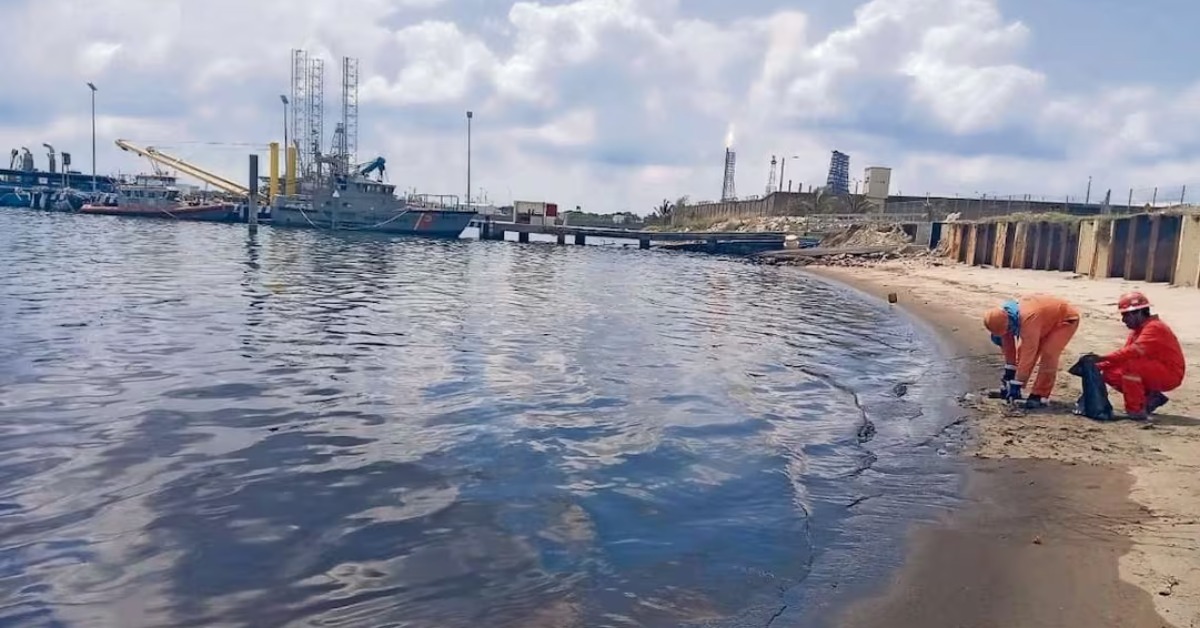
The source question may be clearer, but the cleanup is still unfolding. Authorities have been working with the Navy, Pemex, state agencies, municipal officials, and residents. Their goal is to remove hydrocarbon residue from affected shorelines. A coordination meeting under the national contingency plan organized the response in Veracruz, Alvarado, San Andrés Tuxtla, and Catemaco. Officials said the work includes air, sea, and land inspections, as well as local cleanup brigades.
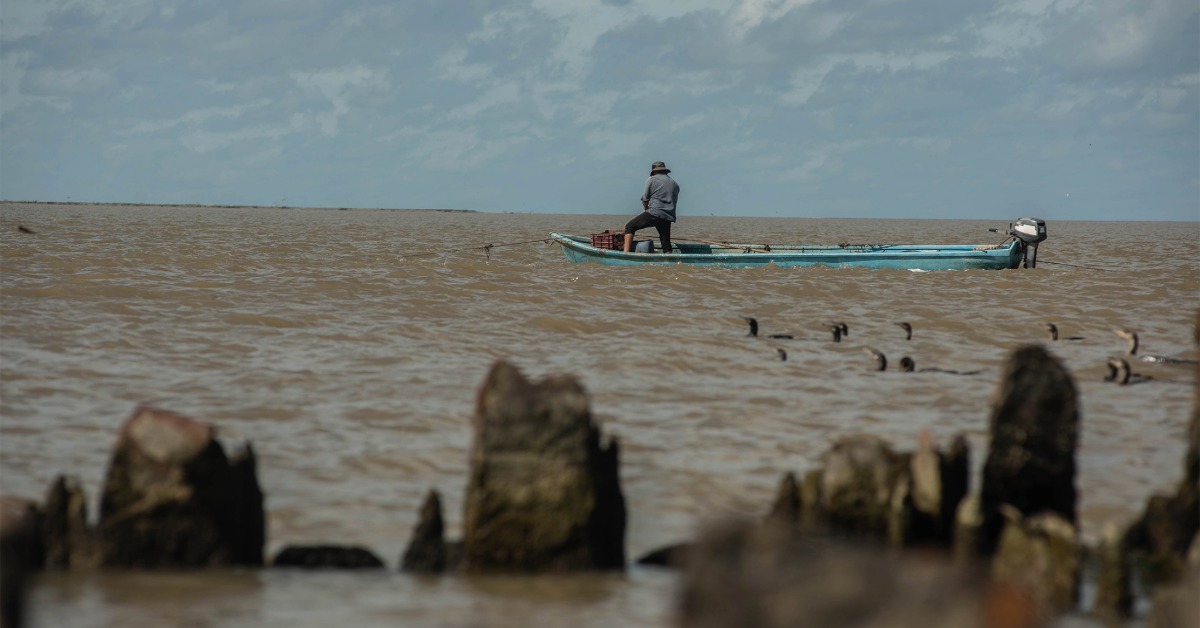
The first visible residue was reported in Pajapan. After that, reports spread to other parts of the coast. In Alvarado, fishermen said the material had reached important fishing areas during Lent. That is one of the key selling periods for seafood. Residents and tourism operators in other coastal zones also said the spill was hurting beach activity and daily work. That helps explain the push to clean affected areas before Semana Santa.
What accountability may look like
Nahle said federal environmental authorities will determine responsibility and penalties. She pointed to ASEA and other federal agencies that will evaluate the case. The state has not publicly named the private company linked to the vessel. That leaves a major part of the story unresolved.
For readers in Mexico’s Gulf region, the practical issue is simple. Identifying a source matters, but recovery on the ground matters more. Fishing communities need clean water and usable nets. Beach towns need shorelines that are safe for visitors. State officials say the spill was contained, but monitoring and cleanup are still continuing. The next phase will show whether that containment holds and whether authorities can limit lasting damage.