
Phones and tablets are becoming a default calming tool for babies, but specialists in Mexico say that convenience may come at a cost. The warning is about more than screen time alone. It is also about what screens replace in the first years of life, why pediatric guidance stays cautious, and why Mexico is beginning to frame digital well-being as a child development issue, not just a private family choice. That shift could shape how parents, schools, and lawmakers respond next.
Mexican specialists are raising new alarms about screen exposure in babies under two. They warn that excessive use of phones and tablets may affect brain plasticity, delay motor development, disrupt sleep, and contribute to early vision problems. The concern emerged from a public discussion in Tijuana focused on children’s digital well-being.
What makes the warning notable is its timing. Mexico is starting to debate healthy digital habits in public policy. The issue is no longer seen as only a family matter. That gives the story a wider meaning. It matters to families across Mexico, including foreign residents raising children or grandchildren here.
The idea of a digital pacifier
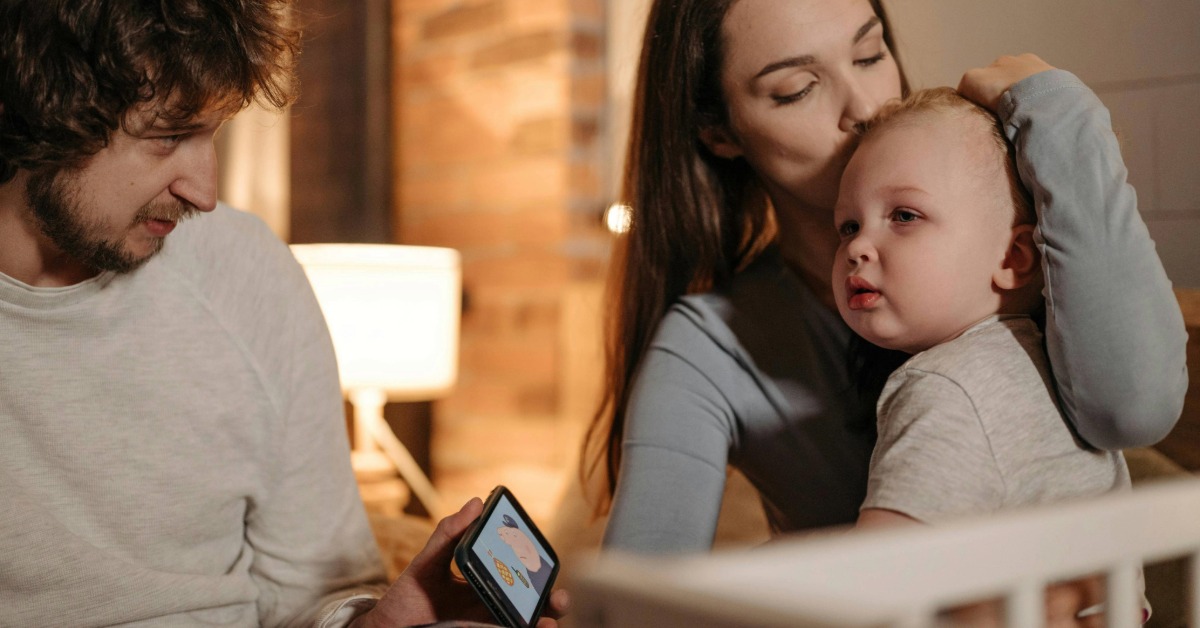
Specialists described a pattern many families already recognize. A phone or tablet becomes a fast way to calm a child, buy time, or prevent a tantrum. In Mexico, some experts have started calling that habit a digital pacifier.
The concern is not that a single short video will harm a child. The deeper issue is repetition. When screens become a routine tool for soothing or distraction, they can replace things babies need most. Those include eye contact, conversation, touch, movement, boredom, and sleep. A Mexican study found that devices were often used while caregivers handled household tasks. It also found that each additional hour of daily use was associated with higher odds of language delay in children under five.
That point matters because babies do not learn the way older children do. In the first months and years, development depends heavily on back-and-forth interaction. Babies learn by hearing familiar voices and watching faces. They reach for objects, crawl, imitate sounds, and test cause and effect in the real world. Screens can occupy attention, but they do not fully replace that work.
What the evidence actually says
The science is serious, but it also needs careful wording. Much of the research shows associations, not proof that screens alone caused a delay. That distinction matters, especially with babies. Family stress, sleep routines, income, content quality, and caregiver involvement also shape development.
Even so, the direction of the evidence has led pediatric groups to exercise caution. The American Academy of Pediatrics recommends minimizing or eliminating media exposure, except for video chatting, for children under 18 months. The World Health Organization recommends limiting screen time for 1-year-olds. For 2-year-olds, it says no more than one hour a day. Less is better.
Research also helps explain why. A meta-analysis found that more screen use was associated with weaker language skills. It also found that later screen exposure, co-viewing, and better-quality programming were linked to stronger language outcomes. A large longitudinal study also found a later pattern. Higher screen time at ages 24 and 36 months was associated with poorer developmental screening scores.
There is also emerging brain research, though it should be read with care. A small study looked at preschool-aged children, not babies. It found an association between heavier screen use and lower integrity of white matter tracts associated with language and literacy. At the same time, a 2023 scoping review focused on infants from birth to 24 months. It found no proven causal relationship between screen exposure and cognitive harm. It did, however, find repeated correlations between screen exposure and delays. In plain terms, the case for caution is stronger than the case for complacency.
Why Mexico is turning this into a policy issue
The warning is landing in a country that is beginning to discuss digital well-being in legal and policy terms. The Tijuana event, where specialists spoke, was organized around a Baja California initiative. That measure would recognize a child’s right to digital well-being. The proposal argues that intensive and unsupervised device use can create physical, emotional, and social risks for children and adolescents.
The measure goes beyond abstract rights language. It calls for awareness campaigns, prevention programs, and more support for free play, face-to-face interaction, physical activity, and rest. Mexico’s education authorities have also opened a wider debate about digital media, mental health, and learning. That does not mean a national crackdown is coming. It does mean the conversation is shifting from private parenting choices to public health and child development.
For international readers in Mexico, that shift is worth watching. Many families arrive with habits shaped by the United States, Canada, or Europe. The same debate has been underway there for years. Mexico is now moving more clearly into that conversation, but with its own public health, education, and child rights framing.
What parents are likely to hear next
The practical message is less dramatic than the headline, but more useful. Specialists are not saying every screen causes permanent harm. They are saying the first years of life should be dominated by real-world interaction. Babies need voices, books, songs, floor time, movement, routines, and responsive adults. Those are the experiences that build language, self-regulation, and early social skills.
That is why the argument is not only about screen minutes. It is also about what screens push out of the day. If a device displaces sleep, play, or conversation, the risk grows. If use is brief, shared, and limited, the picture is different. Mexico’s warning is a reminder that early childhood development still depends on very old things. It depends on attention, time, touch, and human presence.
With information from Instituto de Investigaciones Jurídicas UNAM