Small drones are quietly altering the drug-smuggling playbook. A UN-linked watchdog describes them as “mules” used for short, precise drops near borders and prisons. The report also warns that traffickers are moving from off-the-shelf devices to custom-built models with far higher payloads. The amounts moved are still small compared with trucks and cargo shipments. But the technology is already forcing new security measures on both sides of the U.S.-Mexico border. One recent airspace closure in El Paso shows how quickly the issue can spill into daily life.
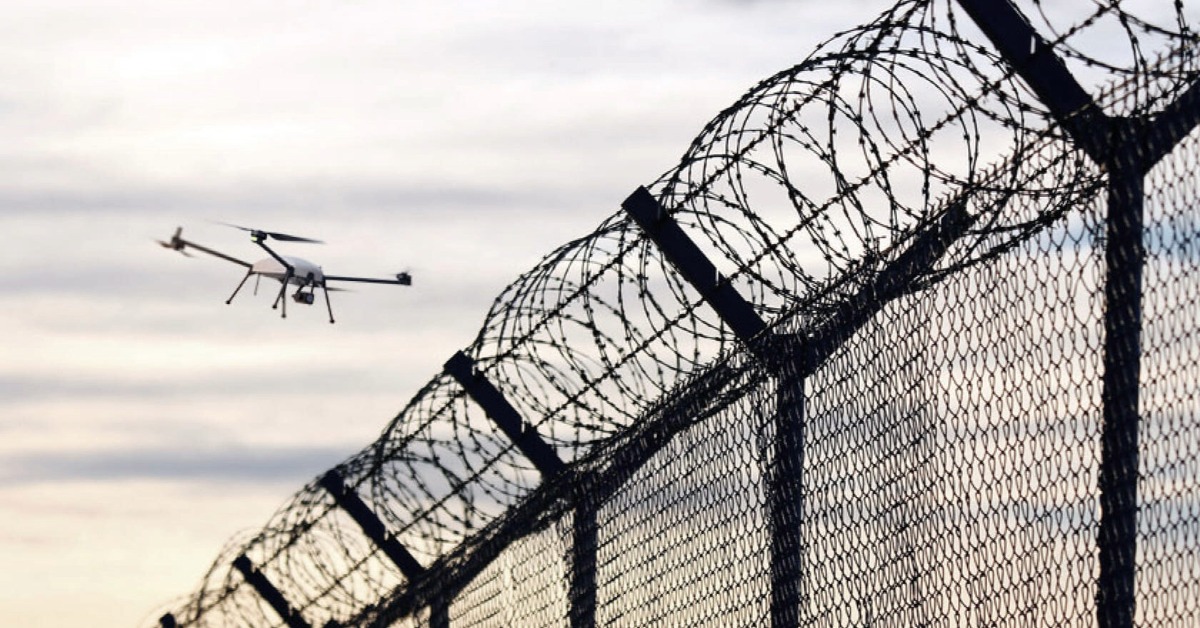
The International Narcotics Control Board, a treaty-based body in the United Nations system, says criminal groups are increasingly using remotely piloted aircraft—commonly called drones—to move illegal drugs and other contraband. It describes these aircraft as a new kind of “mule,” especially in and around border corridors.
The report’s core point is practical. Drones can reduce the need for a person to physically cross a checkpoint or remote terrain. They can also support smuggling in another way: by scouting law enforcement activity from the air. That mix—delivery and surveillance—has become a repeated concern in drug-control reporting for several years.
What the UN-linked report says
The INCB says reports of drone use in drug trafficking have risen in recent years. It frames this as a growing challenge for security agencies. The report describes drone activity near borders and correctional facilities, with incidents reported in Colombia, Mexico, and the United States.
The report also gives a simple baseline for what these “mule” flights usually look like. Drones used directly by traffickers often operate over short distances. Their payloads are commonly limited to a few kilograms, and they may use satellite-based navigation to support pre-set landing points for package drops.
At the same time, the INCB notes a potential shift in capability. It says there are reports that traffickers have moved from imported drones to local sourcing and custom-made systems. Those custom drones are described as capable of carrying far more weight—up to 100 kilograms, according to the report’s summary of reported capabilities.
The report uses examples outside North America to show this is not a single-border issue. It points to drone trafficking activity between Morocco and Spain, and it cites interdictions involving narcotics carried by drones in Jordan. It also points to the use of drones for narcotics smuggling along the border between India and Pakistan.
One line in the report is important for context. Even with rising reports, the INCB says the quantities moved by drone remain negligible compared with established trafficking methods like maritime, land, and air cargo. It warns, though, that technology improvements could raise that share over time.
Why drones work as “mules” for modern drugs
The INCB links the usefulness of drones to broader changes in drug markets. As synthetic drugs expand, trafficking can sometimes shift toward smaller, high-value shipments. The report notes that the lighter weight of many synthetic substances has opened doors for newer smuggling methods, including drones, couriers, and postal channels.
That does not mean drones replace trucks or cargo containers. Instead, drones fit a different niche: short hops, quick drops, and lower exposure for the person sending or receiving a package. In border zones, that niche can matter because a short crossing can still bypass lighting, fences, or patrol patterns—without a person being present at the moment of transfer.
The same logic applies to prisons, which the INCB flags as recurring locations for drone incidents. In that setting, drones can be used for drops over walls and into yards, again minimizing direct contact between outside networks and people inside a facility.
What this looks like in Mexico
In Mexico, the public paper trail is uneven, because “how many drones were seized” is not always reported in regular security briefings. Still, Mexico’s Secretariat of National Defense has provided figures in response to information requests that provide a directional signal.
Those figures show a sharp jump in seizures of drones linked to criminal activity in 2025. The data indicates 85 drones were seized in 2025, compared with 12 in 2024 and 15 in 2023. It also reports a cumulative total of 134 drones seized since 2019.
For readers who live in Mexico but follow U.S. border policy closely, that matters for one reason: Mexico’s anti-drone posture is not only about smuggling. It is also tied to surveillance, intimidation, and in some areas, more violent drone use. Even if drone-smuggling remains a small slice of total drug movement, drone presence can still drive more checkpoints, more air surveillance, and more pressure on border-area policing.
The border ripple effect for travel and security policy
Drone activity is increasingly shaping decisions that affect ordinary travel. In February 2026, the Federal Aviation Administration abruptly shut down airspace impacting El Paso International Airport, then lifted the restriction hours later. Public explanations varied, but reporting around the episode points to counter-drone operations and broader concern about cartel-linked drone activity near the border.
For expats in Mexico—especially those who fly through northern hubs or cross frequently—the lesson is indirect but real. A security issue that starts as a small aircraft near a border can turn into flight disruptions, reroutes, and new restrictions with little notice. The El Paso incident also underscored how counter-drone tools can create their own aviation-safety and coordination problems.
On the U.S. side, the public record shows large numbers of drone detections near the southern border. In Senate testimony, Steven Willoughby of the Department of Homeland Security described daily cartel drone use for surveillance and contraband movement. He cited tens of thousands of drone detections close to the border over a six-month period, along with drug seizures linked to cross-border drone flights.
What authorities are doing and what remains hard
The INCB describes a familiar enforcement arc. Once a tactic becomes routine, governments move from ad hoc responses to systems: detection tools, legal frameworks, and procedures. The report references countermeasures such as radar-based detection and geofencing technologies, and notes that regulation targeting drone risks remains uneven across countries.
Two constraints stand out in both the UN-linked report and U.S. border debates. First, drones are cheaper than many traditional aviation threats and can be replaced quickly. Second, the countermeasures—especially those that disable aircraft—must operate without endangering nearby civilian aircraft. The result is a policy problem as much as a policing one.
It is also worth holding two ideas together. Drone-smuggling remains small in total volume, according to the INCB. Meanwhile, border drug smuggling overall still largely hinges on established channels, including official crossings. That means drones are best understood as a fast-evolving tool at the margins—one that can still cause outsized disruption because it intersects with aviation, prisons, and border security operations.
With information from International Narcotics Control Board Annual Report, U.S. Senate Judiciary Committee, El Universal