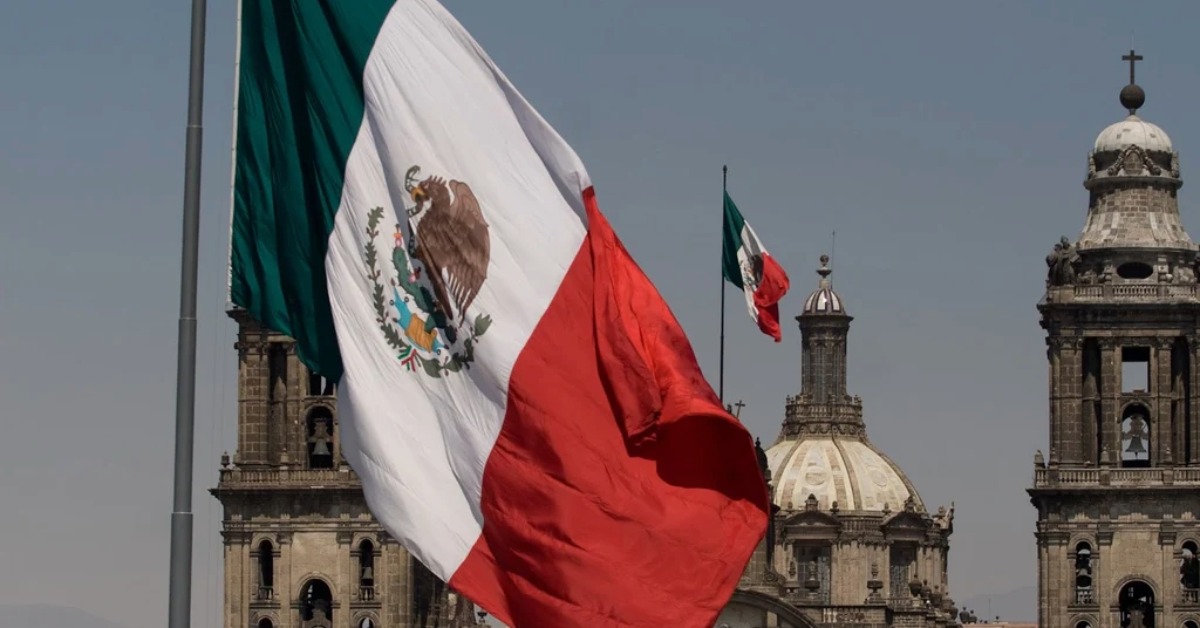
February 24 is observed nationwide as Flag Day, a civic date focused on the national flag and the broader set of state symbols. In the current legal framework, the day is established “solemnly” as Flag Day, and public authorities are expected to carry out civic activities tied to commemoration and public education.
In day-to-day terms, the date is highly visible but not usually disruptive. It is not listed among the mandatory rest days in Article 74 of the Federal Labor Law, meaning most workplaces operate normally unless an employer or institution chooses otherwise.
There are also minor observances that sometimes appear alongside Flag Day in calendars and “efemérides” compilations. One example is a reference to an International Day for mechanics that can appear in institutional timelines for February 24, but it is not the core national commemoration that most residents will encounter.
Why February 24 was chosen
The date points back to the endgame of Mexico’s independence process. On February 24, 1821, Agustín de Iturbide issued the Plan of Iguala, a political-military program that helped unify forces and accelerate the break with Spanish rule.
Multiple sources link Flag Day’s “why this day?” logic to that moment: the Plan of Iguala and the “Three Guarantees” associated with it—religion, independence, and union—are repeatedly cited as the historical anchor for the modern date.
Those “Three Guarantees” also matter because they are tied to the emergence of a tricolor standard used by the Army of the Three Guarantees (Ejército Trigarante). In many retellings, the tricolor serves as the clearest visual bridge between the independence-era coalition and the modern national flag, even though its design and symbolism evolved over time.
How Flag Day became an official national commemoration
The modern commemoration is a 20th-century addition to the civic calendar, shaped by state-building and the institutionalization of national symbols. Many mainstream explainers describe the day as being established in 1934 and then formally recognized by presidential decree in 1940 under Lázaro Cárdenas del Río.
An important nuance appears in a legal-historical timeline published by Suprema Corte de Justicia de la Nación: it notes a first public commemoration in 1937 and then points to 1940 as the year the celebration was officially recognized by decree. This timeline helps explain why different public descriptions sometimes emphasize different “starting points” (first celebration, first broad observance, or formal recognition).
Separately, today’s national-symbols statute reinforces the day in modern law. The current law’s transitory articles state that it entered into force on February 24, 1984—aligning the legal framework for symbols with the date already used for the national commemoration.
What people typically see and hear on Flag Day
Flag Day is most recognizable through short, formal ceremonies. Schools and public institutions commonly hold civic events that include honors to the flag, and the law specifies both the expectation of honors in official settings and the basic form of the civil salute.
The statute also frames February 24 as a day for public education: it calls for special radio and television programming to disseminate the flag’s history and meaning, alongside civic “jornadas” organized by public authorities. This helps explain why the date often triggers a predictable mix of school activity, government messaging, and cultural explainers rather than large-scale street celebrations.
For residents or expats, the most common “on the ground” experience is simply increased visibility: more flags displayed, more school-based ceremonies, and occasional formal events in prominent public spaces.
What the flag is understood to represent
Two layers of meaning tend to dominate public explanations: the independence-era color story and the foundational myth behind the central emblem. An official explainer produced for Mexico’s diplomatic outreach describes the three vertical bands and connects the original color meanings to the independence period and the “Three Guarantees”: green for independence, white for religion, and red for union.
The same document also outlines a popular origin story for the central emblem: an eagle with a snake in its beak, standing on a nopal cactus, tied to a founding legend for Tenochtitlan. While the emblem’s interpretation has shifted across centuries, modern public narratives often treat it as a connective symbol linking pre-Hispanic memory, colonial-era transmission, and national identity.
Recent reporting on research and exhibitions in Mexico City similarly emphasizes the endurance of the eagle-cactus-serpent image as a central national symbol and explains how the motif persisted and spread through colonial and postcolonial eras.
Practical implications for expats living in Mexico
For most expats, the key practical point is that February 24 is usually a normal business day. The federal list of mandatory rest days in the labor law does not include February 24, so paid time off and premium-pay rules typically do not apply unless an employer’s internal policy says otherwise.
At the same time, the day can briefly affect routines around schools and civic institutions. Even outside February 24, the national-symbols law sets expectations for honors to the flag in educational settings (including regular school ceremonies), which helps explain why the flag and related protocols are more embedded in school life than many expats expect when they first arrive.
If an expat is invited to, or simply passes by, a ceremony, the safest expectation is to remain formal: stand still, follow the crowd’s cues during the salute and anthem, and avoid casual behavior around the flag during an organized civic act. That practical etiquette aligns with the law’s emphasis on “honors” and defined protocols in official-civic contexts.