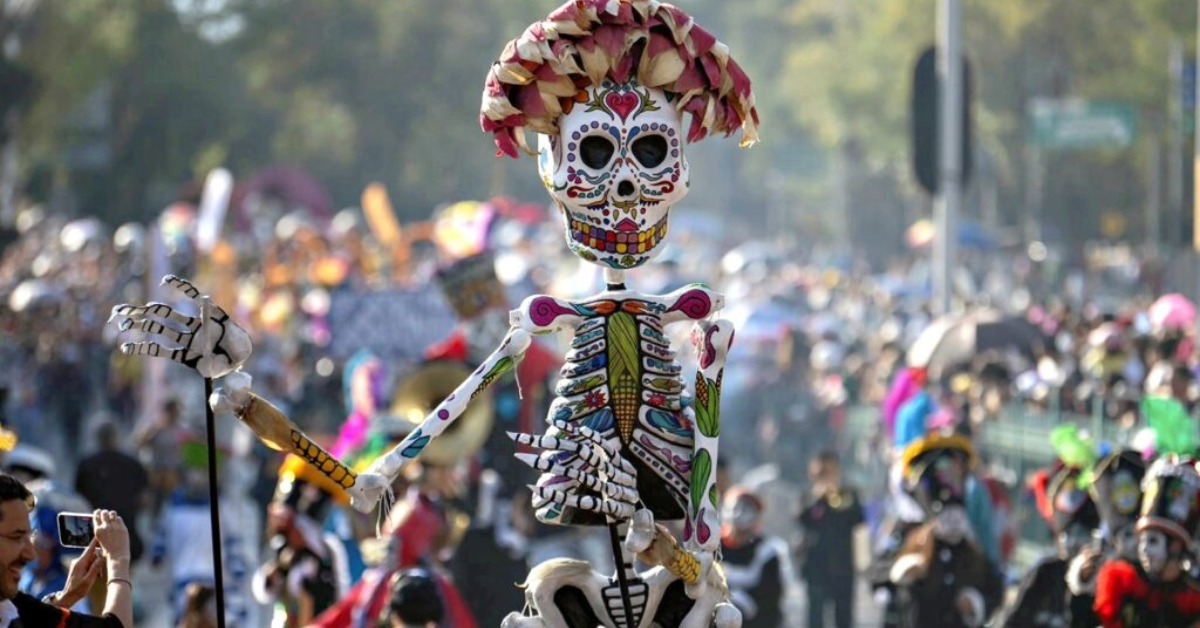
Skull makeup meets soccer kits this month on Paseo de la Reforma. A March 22 “World Cup Catrinas” procession is now on the calendar. It will move from the Angel of Independence toward Bellas Artes. Organizers also set a simple dress code and a required registration step. The schedule starts early with makeup, then rolls into a mid-afternoon walk. That means Reforma will feel different for a few hours. Here’s what’s planned, what you need to join, and how to watch without getting stuck in traffic.
A World Cup twist on a Mexico City staple
Mexico City is adding a new date to its catrina calendar this spring. A parade called Catrinas Mundialistas has been announced for Paseo de la Reforma. It mixes Día de Muertos styling with a World Cup 2026 countdown theme. The broader Day of the Dead tradition is recognized by UNESCO as intangible cultural heritage. The idea is simple. Participants show up in catrina or catrín makeup and clothing, then layer in national-team soccer gear. The organizers behind the long-running Mega Procesión de las Catrinas say this edition is designed for March. That is months before the usual late-October and November season. In public messaging, it is framed as a cultural activation ahead of 2026. The timing is also a reminder of what is coming next. FIFA has confirmed that Mexico City will host the World Cup opening match on June 11, 2026. For residents, expats, and visitors, this March parade offers an early glimpse of how the city plans to blend tradition with the buildup to the tournament.
Route and timing on March 22
The procession is scheduled for Sunday, March 22, 2026. Organizers say the gathering point is the Ángel de la Independencia. Makeup activity is slated to begin at 8:00 in the morning. The walk is set to start at 2:00 in the afternoon. The route follows Paseo de la Reforma, then Avenida Juárez, and ends at the Palacio de Bellas Artes plaza. Organizers have signaled a closing moment there, including group photos. If you plan to watch, expect the busiest window to run through the afternoon. That timing will shift depending on where you stand along the corridor. Reforma’s medians and sidewalks fill quickly near the Angel as groups begin staging. For expats who prefer public transit, stations near the route can be the simplest option. Traffic lanes may close intermittently as the procession moves past. Metro stops vary by section, but Sevilla, Insurgentes, Hidalgo, and Bellas Artes are all close. If you rely on ride-hailing, plan for pickup points a few blocks off Reforma.
If you want to join the march
Participation is open, but it is not a pure show-up-and-walk event. The call specifies a basic uniform. Wear a Mexico national team jersey and arrive encatrinado, meaning dressed and made up as a catrina or catrín. Organizers are also asking would-be marchers to complete a registration form in advance. That step matters if you want to be part of the organized contingent, rather than watching from the sidelines. A roster of makeup artists is expected on site in the morning. The day is being promoted as a coordinated production, not a spontaneous costume meetup. If you are new to Mexico City events, it helps to treat this like a parade with staging. Arrive earlier than you think you need to, especially if you want makeup help. Keep your personal items light and secure, since Reforma crowds can be dense. If you are bringing kids or visiting friends, set a meeting point away from the tightest section near the Angel. You can always rejoin the group further along the route.
Why expats may want this on the calendar
For expats, the appeal is partly practical. This is a Reforma event with no ticket required, and it falls outside the Day of the Dead rush. It also offers a quick read on the city’s mood as 2026 approaches. Many of Mexico City’s high-attendance cultural events take place in the street. This one is designed around costumes and photography. At the same time, it is worth treating it as a moving disruption. If you have errands that rely on Reforma crossings, plan them earlier or later. If you live nearby, the noise and foot traffic may feel closer than you expect. Visitors in town for a few days can use the route as a walking anchor. It connects major landmarks and museum zones on a single corridor. For residents, it can also be a reminder that World Cup prep is not only about stadiums. It is also about how the city uses public space to stage identity and civic pride, even in March.
With information from UNESCO Intangible Cultural Heritage, FIFA World Cup 2026