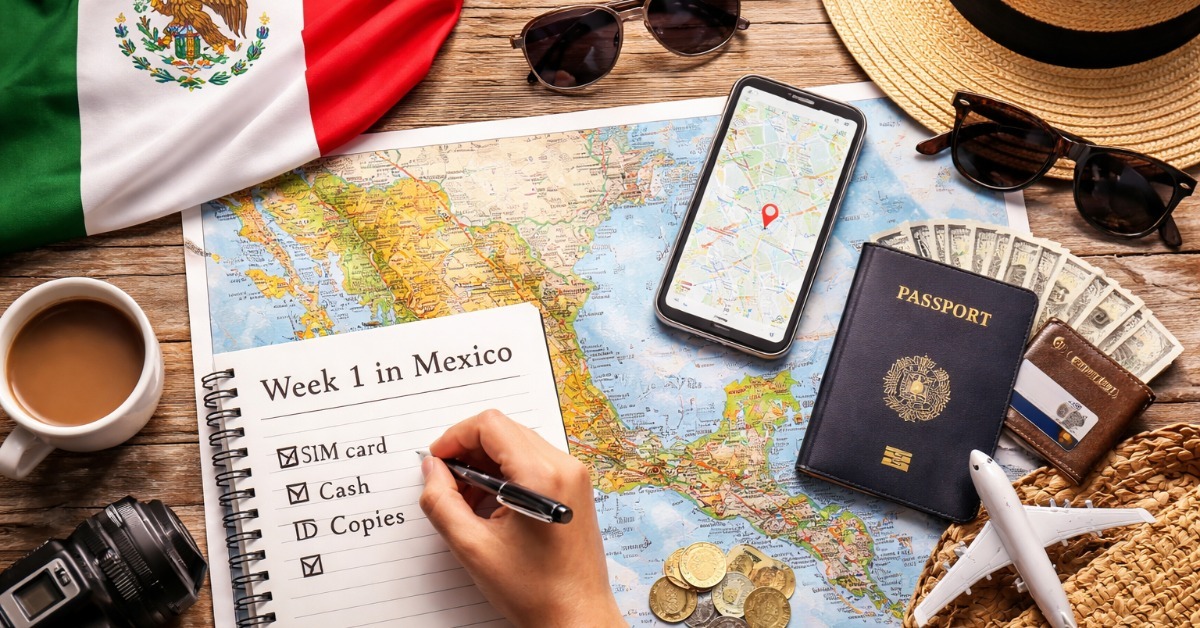
Week one in Mexico is when paperwork and routines get locked in. This guide follows a clear order. Save the right immigration record. Activate a working SIM. Set up predictable cash access. Pick transportation defaults you can repeat. It also covers tasks many people delay, such as proof of address and emergency numbers. Do the setup early, before you sign contracts or get too comfortable. The checklist is written for expats, but it’s also useful for long-stay visitors. Read it once before you land. Then follow it day by day after arrival.
The first two days
When you arrive, treat your entry record as essential. If you enter as a visitor, you may receive a Forma Migratoria Múltiple (FMM) or a digital version. In many cases, it is issued by the Instituto Nacional de Migración. Save it in two places. Officers can request your passport and entry record. You may also need it for later procedures. If your entry is handled as a digital FMMd, download the file as soon as you can. Keep it with your passport scan. If you entered with a consular temporary resident visa, act fast. Official guidance on Ventanilla Única sets a deadline. You must exchange that visa for a resident card through the immigration “canje” process within thirty days of entry. Before you leave the airport or border area, confirm the dates and status on your record. That same day, scan your passport photo page, visa or card, and entry record. Keep one copy offline and one in the cloud. Store printed copies separately from the originals, so a lost bag is not a crisis.
Decide early which Mexican address you will use on forms, even if it is temporary. Many routine tasks rely on an address that can be verified. If you plan to work for local clients, open accounts, or set up long-term services, expect to be asked for a comprobante de domicilio. That proof is often a recent utility bill or a lease. If your path includes tax paperwork, know that Servicio de Administración Tributaria has foreigner registration paths that are separate from immigration. Official guidance describes who can register and notes that the process is free. It may start online and finish in person, usually by appointment. For many residents, a CURP is part of the identity chain. Federal rules describe how it is assigned to foreigners who apply for temporary or permanent resident status. Build a single folder for originals and copies. Add clear photos, file names, and dates, so you can reuse them without stress.
Handle phone service early, because it affects access to basics. Since January 2026, mobile lines must be linked to a verified identity under official line‑identification rules. Operators point to these rules as published in the Diario Oficial de la Federación. In practice, your new SIM or eSIM purchase is not just about coverage and price. Expect an identity check, and keep your passport available until your setup is stable. Major operators like Telcel, AT&T México, and Movistar now offer in‑store and online flows for this linkage. For example, Telcel says users must register with an official photo ID and CURP. It also says foreigners can register with a valid passport or, where applicable, a temporary CURP for foreigners. Telcel notes that the remote path gives you up to three attempts. If it fails, you are directed to in‑person support. Movistar publishes a similar requirement and confirms that a passport works for Mexican and foreign users. Once your line is active, turn on two‑factor codes, banking alerts, and delivery updates the same day. That single step reduces friction across many other week‑one tasks.
The rest of week one
Cash is still part of daily life, even in cities. Start by making access predictable. CONDUSEF recommends withdrawing only what you need and favoring ATMs located in bank branches. It also advises avoiding isolated machines, especially at night. When you use an ATM that is not from your own bank, the commission must be shown on screen, so you can accept or cancel. This is the moment to compare, because fees can vary by bank. To lower surprises, use Banco de México’s UbiCajero locator to find nearby ATMs and see fees, then pick one you can reuse. When you pay by card or withdraw cash, watch for dynamic currency conversion. Visa explains that merchants and ATMs should offer a clear choice to accept or decline conversion. It also notes that conversion usually includes a markup. In Mexico, the simplest rule is to let your card issuer convert. Choose to pay or withdraw in pesos, not your home currency.
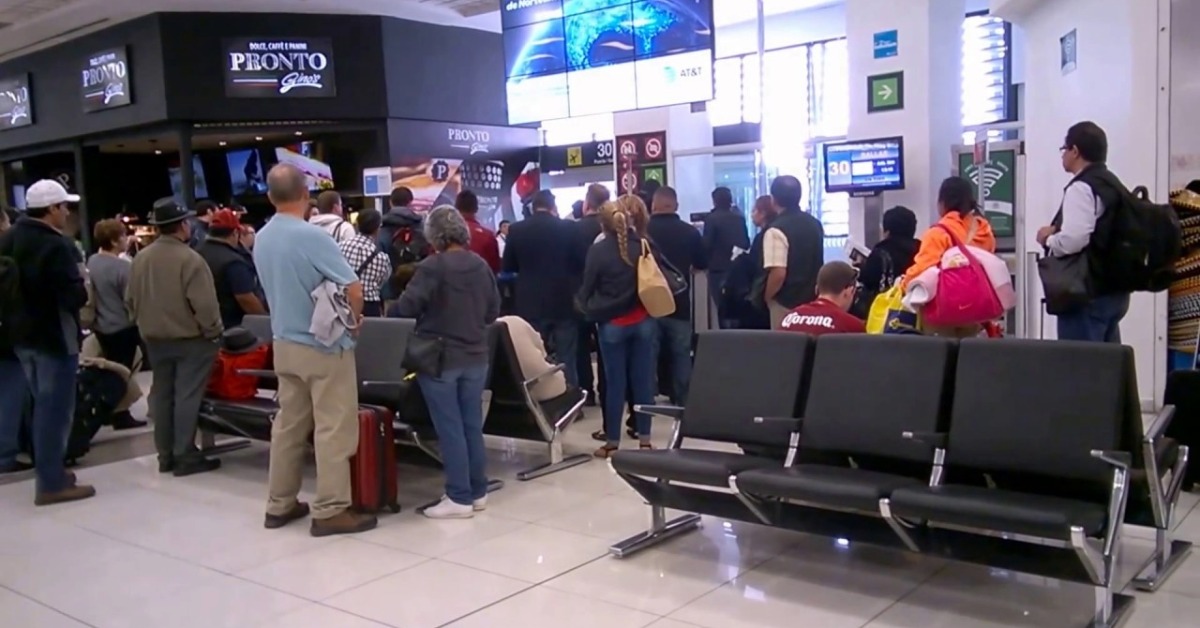
Transportation decisions in week one shape your risk and your budget. Your first trip from the airport is the test case. Choose authorized airport transport, and pay through official channels, not through people approaching you. At Mexico City International Airport, the airport publishes a roster of authorized taxi providers. It also repeats the safety message to use only authorized taxis at the terminals. Keep receipts for prepaid rides and screenshot reservation details. After you arrive, pick a default for daily travel that you can repeat. Learn the local address format for your home and the nearest landmark. Drivers often confirm by reference points, not postal codes. Set up offline maps, and save the route from your home to a grocery store, a pharmacy, and your nearest bank branch. If you plan to drive, confirm what documents your insurer or rental company will require before you sign. The goal for week one is consistency, not exploration.
Week one ends fast, so reserve time for items with deadlines. If you arrived on a resident visa, start your immigration appointment planning right away. The canje window is measured in days, not months. In the same spirit, do not postpone your phone‑line linkage. Telcel states that existing lines have a published deadline, and that service can be suspended if you do not register. It also states that, during a suspension, only emergency and citizen‑assistance numbers remain available. Movistar also warns that lines may be disabled after the deadline. Both Telcel and Movistar describe portals to check which lines are linked to you. Build your own “failure plan” now, while things are calm. Save the national emergency number, 911, and confirm how it works from your local phone. Keep a printed card with your address, a local contact, and any medical allergies in Spanish. Then, once your paperwork and connectivity are stable, you can start exploring with less friction.